Author name: Peter Zendzian

Peter Zendzian is the Founder & Chief Cybersecurity Strategist at Office Heroes, a cybersecurity-focused Managed IT Service Provider helping CPA firms, law firms, credit unions, defense contractors, and small regulated businesses stay secure, compliant, and audit-ready.

Peter served more than 20 years in the U.S. Navy, retiring as a Chief Petty Officer after leading secure communications, cybersecurity operations, and technology teams across joint military environments. His background in classified systems, compliance, risk management, and operational security directly shapes Office Heroes’ modern, practical approach to protecting small businesses.

He is the co-author of two bestselling cybersecurity books:


Your Business Must Have a Cybersecurity Risk Assessment


Cybersecurity Essentials for Small Businesses


Peter is a trusted advisor to business owners and a subject matter expert in:

FTC Safeguards Rule compliance
GLBA compliance
NIST SP 800-171
CMMC Level 2 readiness
Microsoft 365 and Azure security
Endpoint protection, EDR, and vulnerability management
Data protection, disaster recovery, and cloud resilience
Secure remote access and Azure Virtual Desktop
Small business workflow automation

Certifications & Recognition

Retired U.S. Navy Chief Petty Officer (E-7)
DoD Cyber & Communications Leadership Training
20+ years managing classified systems and secure communications
Co-author of two bestselling cybersecurity books
Expert in FTC Safeguards, GLBA, NIST SP 800-171, and CMMC Level 2
Microsoft 365 and Azure security practitioner
Specialist in data protection, disaster recovery, and ransomware defense


Peter’s mission is simple: to make world-class cybersecurity, compliance, and IT support accessible to small businesses that don’t have internal IT or security teams — giving them the protection, clarity, and confidence they deserve.

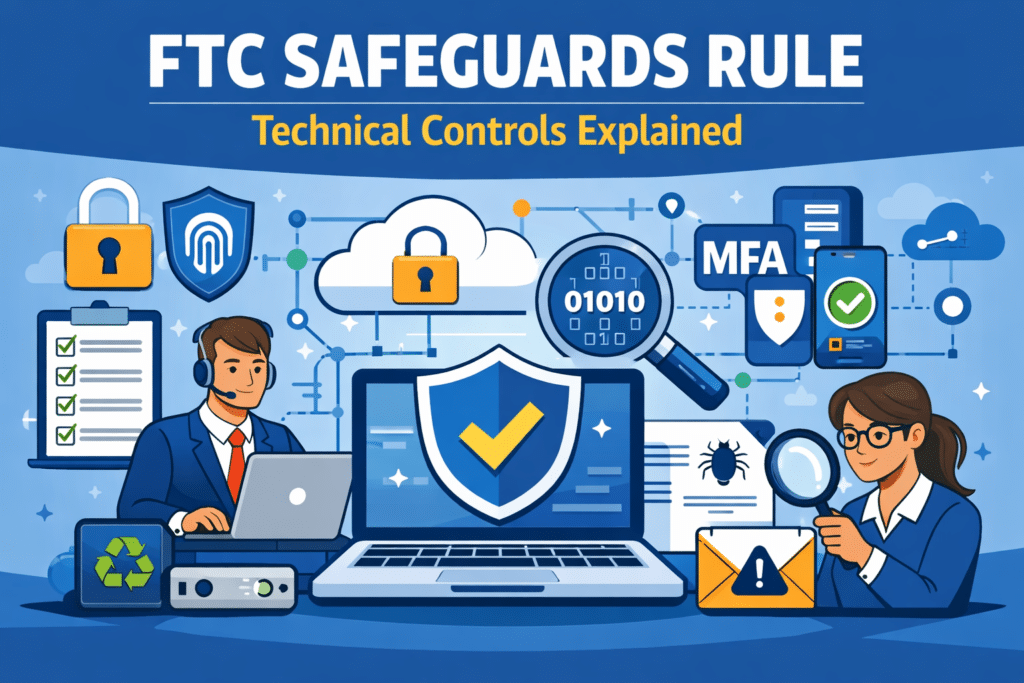
Illustration of two professionals discussing technical controls for cybersecurity compliance, with icons for encryption, MFA, antivirus, and secure access under the title "FTC Safeguards Rule: Technical Controls Explained.
Compliance

Technical Controls Required by the FTC Safeguards Rule

The FTC Safeguards Rule Technical Controls requires covered financial institutions to implement specific technical safeguards, like access controls, encryption, multi-factor authentication (MFA), secure disposal, change management, and logging/monitoring—based on risk. The Rule is practical by design: it’s less about buying a tool and more about enforcing controls, documenting exceptions, and verifying the controls work through […]

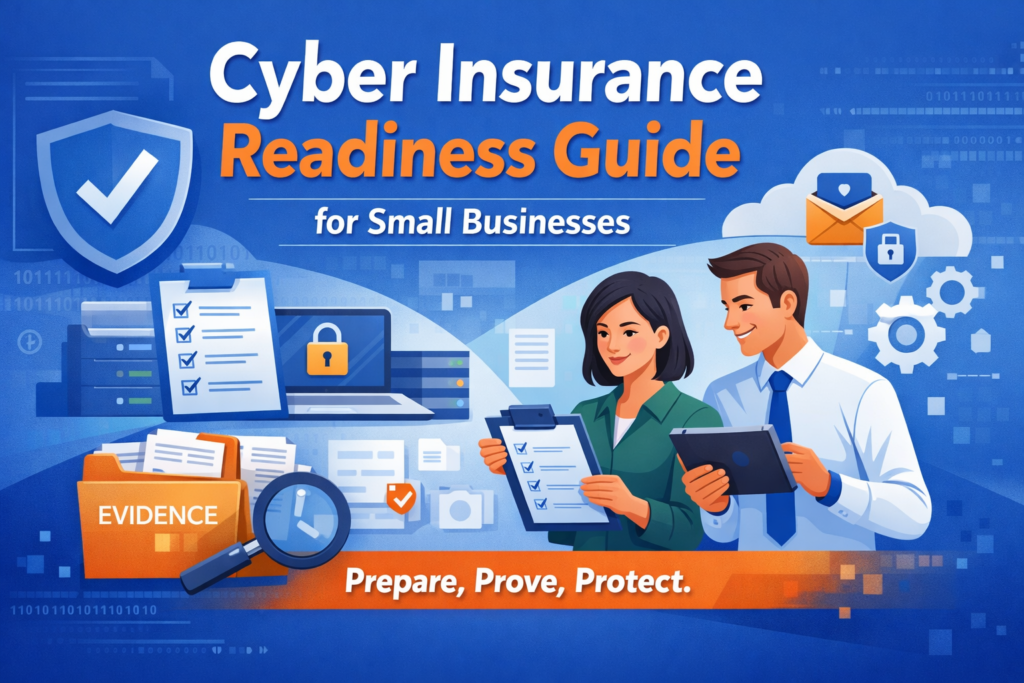
A businesswoman and businessman review checklists and documents, surrounded by cyber security icons, with the text "Cyber Insurance Readiness Guide for Small Businesses." Includes a cyber insurance application checklist to help you prepare, prove, and protect.
Security Guides

Cyber Insurance Readiness Guide for Small Businesses

Cyber insurance applications have become more detailed, and insurers are increasingly expecting you to prove key security controls, not just say you have them. This guide helps small businesses prepare for both first-time applications and renewals by translating common insurer questions into plain-English requirements and a deep evidence pack you can assemble ahead of time. The goal is to reduce underwriting

Compliance

The Fastest Way to Prepare for an FTC Audit

The fastest way to prepare for an FTC audit is to focus on documentation, accountability, and evidence—not last-minute technology changes. FTC audits look for proof that you understand your risks, have assigned responsibility, and can demonstrate how safeguards are implemented and reviewed over time. Speed comes from organizing what already exists, filling clear documentation gaps,

Compliance

How To Perform a Risk Assessment (FTC-Compliant Guide)

An FTC-compliant risk assessment is a documented, risk-based process for identifying how customer information could be exposed, misused, or disrupted—and deciding what safeguards are reasonable for your business. Under the FTC Safeguards Rule, this is not a one-time checklist or a single technical scan, but an ongoing evaluation tied to how your organization actually operates,

Compliance

How To Build a WISP (Written Information Security Program) for the FTC Safeguards Rule

A WISP (Written Information Security Program) is the written, living “source of truth” for how your business protects customer information under the FTC Safeguards Rule. It’s not just a policy binder—it should connect your risk assessment to the safeguards you actually operate (access controls, encryption, training, vendor oversight, monitoring/testing, and incident response). The most maintainable

Compliance

Do CPA Firms Have to Comply with the FTC Safeguards Rule?

In many cases, yes. CPA firms that provide tax preparation or similar services often fall under the FTC Safeguards Rule, a GLBA requirement for certain “financial institutions.” If covered, your firm must maintain a written information security program with safeguards appropriate to your size, complexity, and the sensitivity of client data you handle. This article is

Compliance

FTC Safeguards Rule Requirements (Plain English Breakdown)

The FTC Safeguards Rule requires covered businesses to maintain a written information security program that protects customer financial information through clear ownership, a written risk assessment, risk-based safeguards, regular testing/monitoring, vendor oversight, and leadership reporting. It’s not a “buy tools and you’re compliant” rule—regulators generally look for a repeatable program you can explain and evidence.

Compliance

FTC Safeguards Rule: A Plain-English Compliance Guide for Small Businesses

The FTC Safeguards Rule is a federal regulation that requires small businesses that handle customer financial data to maintain a written cybersecurity and data protection program. It applies to CPA firms, accounting practices, tax preparers, and other service providers that access nonpublic financial information. Businesses must document their security policies, perform regular risk assessments, protect

Scroll to Top